

Education in India has never been kind to an average student the way it is to the A-graders. Rohit did not care much about the system, being an ordinary kid for most of his school days. However, his parents instilled in him the value of each rupee due to their humble origins. He grew up watching them track every little expense and going over and over a price tag before buying anything. Rohit knew early that his life choices would mostly be the outcome of the necessities that circled him. Like any considerate child, he resolved to do better. But could he ever rise above the system that rarely noticed the ordinary?
Rohit was in class 7 when he woke up to a newfound fascination with metallic boxes aka computers. He did not have one of his own so he’d crouch over his friends dusty old desktop. He spent hours playing games and teasing each button to see how it behaved. It didn’t take long for him to crave a computer of his own. Like anyone wedded to old thoughts, Rohit’s father laid a bet in front of him. “You’ll get a computer only if you promise to study engineering.” You can’t really blame his father for choosing only medicine or engineering, when society still clings to them as the only safest options. He finished schooling and went on to pursue science. Little did he know, that one promise would lay the stage for everything that was to come.
If you were to ask 10-year-old Rohit if he enjoyed math, you’d probably be surprised. Numbers were his sworn enemy. He often got through by single-digits or just passing marks. Much of his detest stemmed from the way the subject was taught. And you might not anticipate how the same boy would, years later, come to love it with so much avidity. In his final 12th boards, he scored a whopping 85 points out of 100. Rohit recalled he owes every part of it to his teachers. “I had teachers who pushed me to do well and put their faith in me.” Maybe we all, at some point in our story, look for a second pair of eyes.
At his father’s and other relatives’ influence, Rohit walked straight into engineering. When he surprised himself by doing well in a subject that didn’t otherwise appeal to him, he wondered if he might even end up liking code too. The first couple of years he tried finding his taste in the programming languages. C++ and HTML held his interest very well while Java did not. One day, he let his strengths carry him to a sweet spot between his passion for cricket and the nuances of coding. In his second year of engineering, Rohit built a schedule for the upcoming 2011 cricket World Cup using HTML. He loved watching and playing cricket ever since he could walk. This piece of work grew naturally from his interest in the game, which he later repurposed for his semester project and was well received.
For any middle‑class lad born without a silver spoon, every bite had to be earned with sweat. And to Rohit, this lesson was hammered into him at a young age. “I’d usually clear the first round of interview, but get stuck in GDs. I spent days and sometimes nights at a friend’s library to push out some dummy projects and groom myself for placements.” Three months later, he joined a service-based IT company, starting out as a software intern. This was where Rohit first dipped his toes into the world of ERPs. The company where he worked were implementation partners of ERPNext. So he eventually had to go through a learning phase which threw at him some blockers. “I was working on the earliest version of ERPNext, and Python backend wasn’t that easy to handle.” He poured his doubts into every open channel of connection. “I once asked a silly question on discuss forum to which Rushabh replied ‘My magical eyes are not working’. I was humbled.” Within 6 months, he was promoted to full-time role.
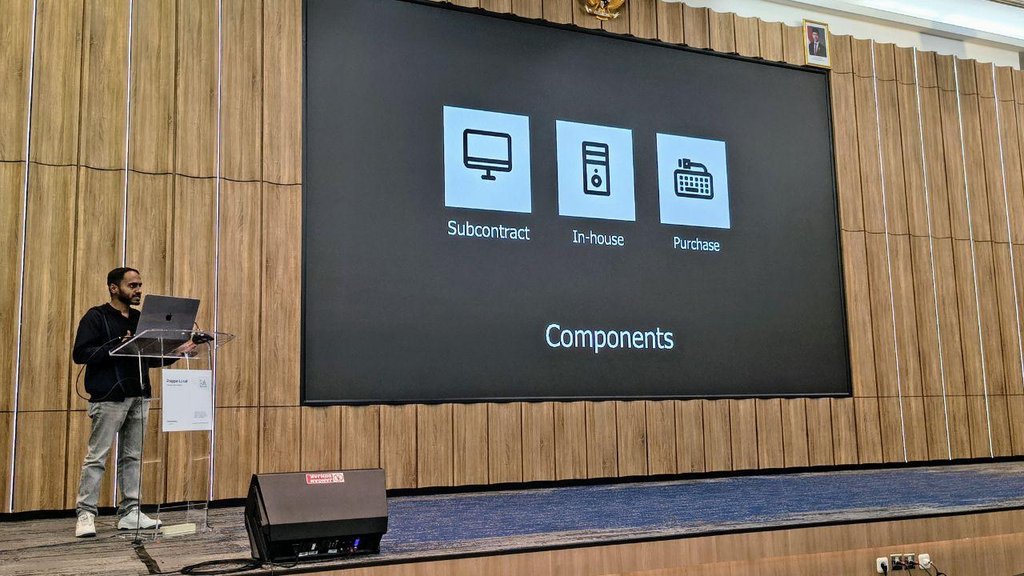
Out of the many modules he touched, manufacturing picked Rohit's interest, and you are not ready to know where this fascination stems from. “Back when I was a teen, I’d binge an unhealthy number of How It’s Made episodes on Discovery. I just loved seeing how things are made before they hit the shelves.” Some of these nuts and bolts were mapped in ERPNext, which let him fondly connect the dots. He took care of manufacturing related services and implementations for a year and half and worked on many different use-cases.
In a service-first company, the only thing you can plan for is that nothing ever goes as planned. Rohit always empathised with their customers. “If our services don’t make them happy, what is the point?” He’d take things personally and took the lead wherever needed. He’d talk to clients directly and laid down their problems and annoyance himself. He looked after the entire loop from information gathering and design to development and deployment for almost 2 years. It was just him and one other teammate. His ingrained tendency to see each use-case as his own, threw some hard calls at him. This time it was a very big project that Rohit was working on and the instructions were vague. The client’s payment was also stuck. They often ask for over-customization which Rohit knew would break things in future for them. Every warning he gave was met with flat refusals. At this point, Rohit was working on ERPNext version 5. Despite him trying to get the client see the bigger picture where things would clearly go south, it came of no use. Each day left him frayed, burned out as he sometimes had to stay up late till 3-4 am in office. Problems started to surface, and with very little left to hold him, he put in his papers.
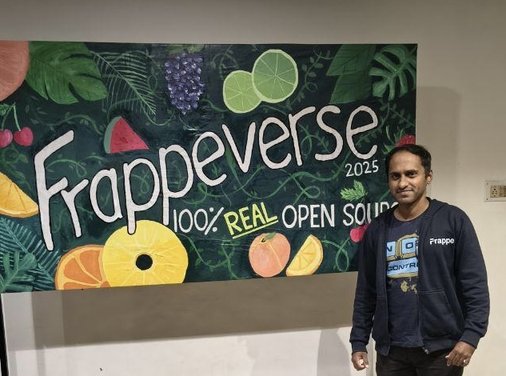
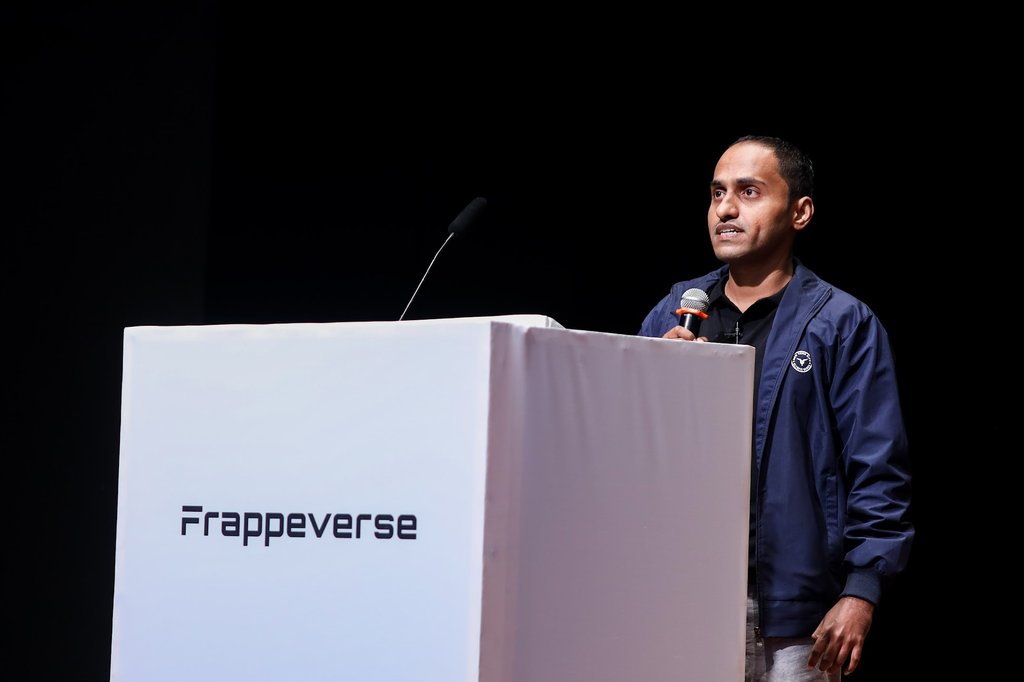
One of Rohit’s connections got him introduced to Frappe. He was little skeptical to make a switch from services to product based. By this time, open-source was the only thread that was holding him. Since he’s already been a contributor at ERPNext due to his previous projects, he had an easy pass to get in. He was hired in no time. “I was slightly intimidated at first and was very shy. I would not miss any open day and decided to travel to office every tuesday.” For Rohit lived in Pune, commute was (and still is) not easy. As many, he started with a project on Frappe Framework. Since he carried an interest already, he took over the stock and manufacturing module soon on ERPNext. The widely used features that you see today such as inventory, traceability and production workflows bore his craft. “I felt I was getting back to myself.” He gradually spoke at many Frappeverses, which he says have pushed him past his shyness.
Years later today, Rohit has completed a decade of working with Frappe. For someone who’s aged along with the company, he’ll throw a little big-brother advice your way. “You need to have a taste in whatever you do in life”. For Rohit, it was never tough to choose hard work, but to let go of his own taste. That kind of grit made him take things head-on. Even in his downtime, he stays in the game. This time, it’s the game of cricket. On any given sunday, you’ll find him on ground, bat in hand, lost in his bubble of joy. Long drives on Pune’s wide roads, and the city’s tempting aroma of street food sneaking past his nose is his only weakness.
Had you met 10-year-old Rohit, you couldn’t have predicted how a simple promise from his father could take him this far.


·
Great Journey !!
·
Way to go Rohit!
One challenge that you have to take on now is to embed Demand Driven concepts in Stock and Manufacturing module. You have the knowledge and skills to do it.
Bigger challenge is to convince the Frappe team and the Gardner in chief that this is a worthy pursuit.
All the best!