
The first time I read news in sixty words, I knew something had changed.
Back in 2015, I came across an app called InShorts. The headline was about a building that had collapsed somewhere in central Mumbai. That's all I remember. There was a short paragraph below it, in small grey font. Not enough to evoke anything. The brevity was uncomfortable, but what really made me think was the fact that I could just swipe up and move on to the next piece of news. No pause. No time to sit with what I had just read. It was so easy to not care. I don’t remember the news anymore. I just remember how quickly I moved on from it.
Nevertheless, it still felt useful. At least it was information. But it also introduced something new. Vertical swiping. One thing after another. Context became optional. Attention became replaceable. Looking back, that was probably the beginning of what we now call scrolling culture (or doomscrolling). Reels, shorts, thirty-second opinions. It was a black hole that was bound to affect so much more.
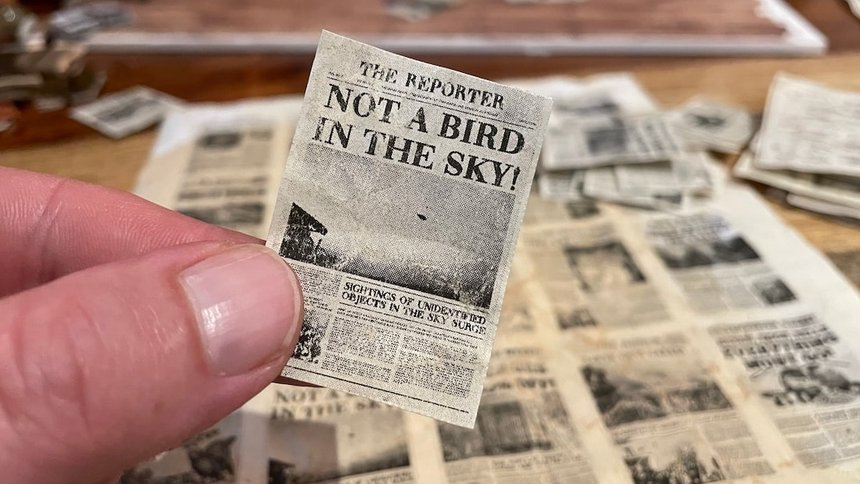 Mini news (quite literally)
There's another term that helps define this class of modern inattentiveness. Second screen syndrome. Writers and filmmakers are told to assume that their audience is also scrolling on their phones while watching. So stories are written differently, plots are simplified and dialogues are repeated. Everything has to survive distraction. You can call it adaptation. Or you can call it lowered ambition. Creators simplify their ideas, platforms reward it, and audiences slowly get used to less. This is why we keep hearing that people don’t make movies like they used to. And this doesn’t just affect entertainment, it affects how we think. And it definitely affects how we create.
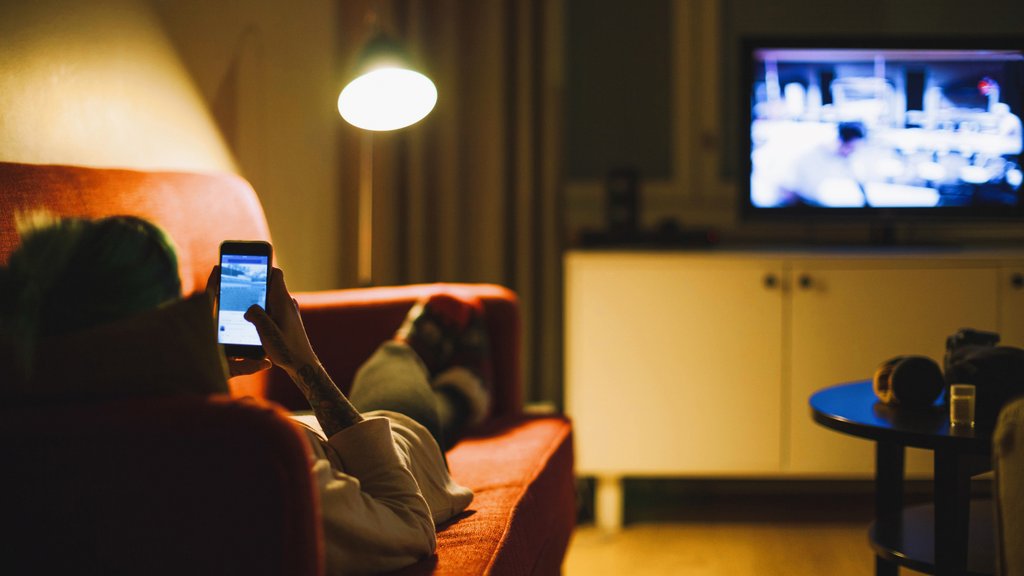 Distracting ourselves from everything
Today, we see most creators choose short-form, and for good reason. Because if you’ve used the internet in the last half-decade, you know how much short-form dominates. Faster. Sharper. Easier to consume (even easier to forget). Long-form, on the other hand, asks for commitment. Both from the creator and from the audience. And that’s why it’s scary.
One of the better ways I've understood this is through reading. I’ll admit this first. After 2020, I have never made it through a book without checking my phone. But twice this year, just twice, I sat down and read a book in a single sitting without interruptions. Which is honestly embarrassing coming from someone who used to read dozens of books a year. I managed it only because I turned it into a challenge. And that itself felt wrong. Reading shouldn’t feel like discipline, it should feel like intent.
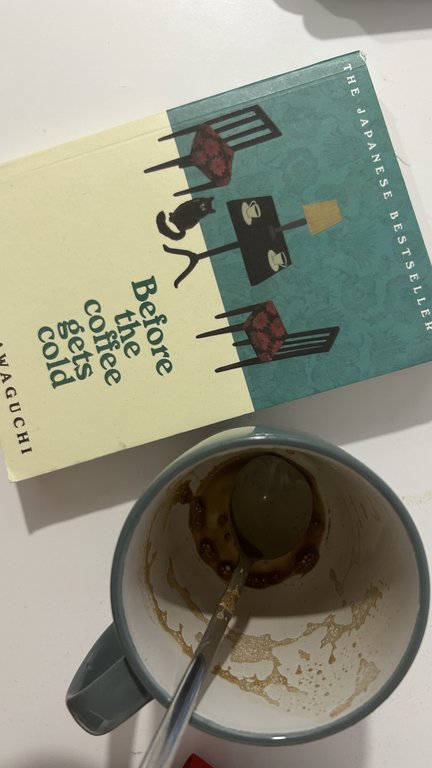 A book series that deserved uninterrupted reading
But the difference was obvious. Finishing the book felt far better than any amount of scrolling ever has. Books are probably the best proof of long-form we have. They’re the oldest, most demanding version of it, and they’ve survived everything. Which makes them a good way to gauge how much of our attention we’ve actually lost, or are still trying to reclaim.
And even though I might have only read a couple of books without distraction this year, I’ve spent much more time making long-form content for Frappe. It’s not been easy because the format is so open to judgement. It’s not just a caption or a title, it’s a monologue. There’s time for people to think, analyse and remember. They can find a hundred things wrong and five things right, or the other way around. And the worst part is, you can’t hide behind a punchline. That’s why I’ve found myself taking days after writing something or recording an episode to go over it again and again. I read every line. I ask myself if it makes sense.
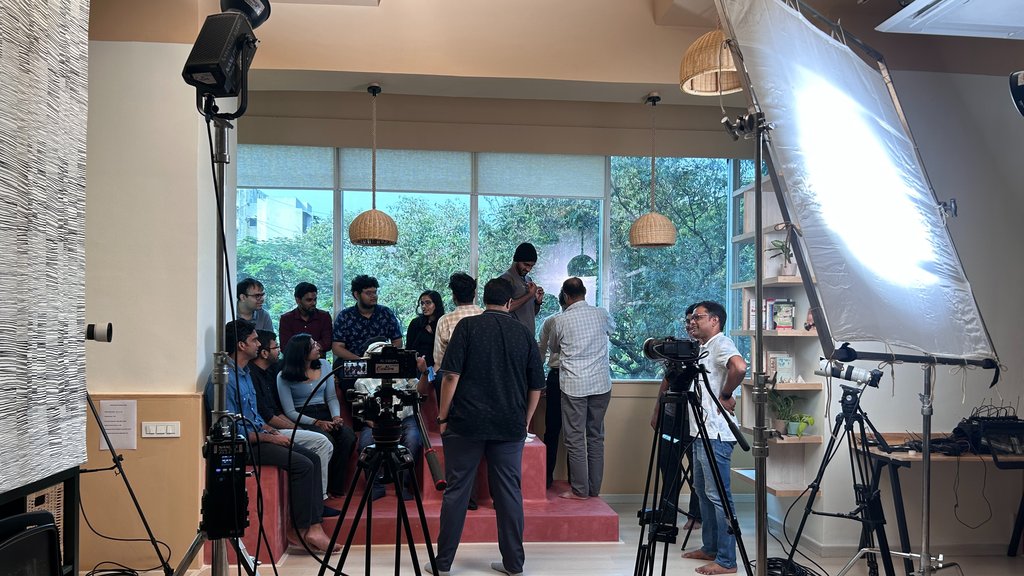 Some BTS from long-form content coming up on Frappe's channel
Another thing I’ve come to realise is that quick content might gain popularity, but the longer format gives a chance to build the brand’s assets. That’s also why I’ve tried to step away from social media, especially at work. I’ve played that game before. It works. But I’ve found myself refusing to do it again. Even personally, I don’t want to become an influencer. I do want to be known for my work. But I find it hard to invest time into creating something only for cosmetic growth.
As an audience, I’m not immune to doomscrolling. Weekends. Late nights. It happens. It’s a coping mechanism. There’s no real emotional payoff there. You feel distracted, not fulfilled. I assume most people will share the feeling at one point or another (after they scroll long enough). Long-form doesn’t rush you out of the feeling. It gives you space to decide if you actually like something. Space for a slower kind of dopamine.
And when it comes to validation, the numbers rarely end up winning. Twenty people watching something all the way through versus a thousand people watching thirty seconds of something mean very different things. I would choose lesser people paying attention over more people forgetting. You need ten reels for someone to vaguely remember your brand. But one genuinely good piece of content can make them pause and look you up.
.png) What makes it worth it
What makes it worth it
Our parents always tell us to respond, not react. We’re faced with that choice every single day now. Short-form content teaches us to react and move on. Long-form asks us to form an opinion slowly. This matters when you’re making marketing decisions. For any internal team, the kind of content you choose to make shows the mettle of the brand. Choosing quality is not easy. Even subtly, when a brand chooses long-form, it signals that it plans to stay. People eventually notice.
Doing it this way can feel risky, maybe even inefficient. On paper, the effort and the metrics rarely match. There are no shortcuts. But I’ve started to believe that compounding works better here. Most of my projects move slower now. I rewrite scripts. I have one too many conversations. I rethink things constantly. It’s frustrating at times because speed feels like a reward. But what’s the point if people don’t actually like what you make. I’m not saying short-form is useless or that numbers shouldn't be considered as a metric. But now, I’m more interested in how the work feels, and in who it attracts. Long-form lets me do that without the stereotypical pressure of the ‘Insights’ button under every post.
I want people to feel less alone in their struggle with attention. Less guilty about wanting depth. Less strange for wanting to slow down. If this perspective feels unfamiliar, that’s okay. It does to me too. Long-form isn’t just about creating content. It’s about how we choose to think in a world that keeps asking us to move on.
I’ll end with this quote, which I probably read in a book somewhere.
Some things just deserve more time than we give them.


·
Many news and entertainment media don't really bring news content, but they sell their audience's attention to advertisers (from product makers to political electorate influencing), e.g. "power games now new with AI". As far as I am concerned, your podcast format stuck with the very the first episode. Real people talking about real experiences in real life's and real work's personal evolution.
·
This resonated deeply. I remember how i used to love taking a topic and think about it for hours on end, but it seems impossible to do so now without feeling restless or feeling like I need to interact with something. We’re so used to a culture that celebrates motion more than meaning, where “engagement” often replaces understanding. Thank you for articulating what so many of us are quietly feeling.
·
Agree on the gratification from doom scrolling a book to finish vs doom scrolling the Internet to eternity. I like to disconnect (quite literally switch everything off) with a book when I’m overstimulated and need to feel the slowness of life again.
Enjoyed that series btw! :)