


Allowing employees to pick their own pay is a source of a lot of curiosity and questions, because it goes so much against conventional thinking. The dominant model of running companies is that compensation is decided by the “manager” or the person you report to. It means that the worth of someone’s labour is a function of how valuable they are to their superior and so on. Letting people choose their own pay feels like blasphemy.
At some level, letting someone have so much power over how your work is valued feels wrong. Yes you have a choice to negotiate and the freedom to quit and find another job, but that is not an easy decision. Quitting a job means you lose all the social capital you have built in the organisation just to prove a point. Most people just suck it up and accept that they have to “be nice” to their superior, and get on with life.
When I started Frappe, I wanted to do things based on what I thought was right. I was naive and idealistic. Even when I was younger, I was not very amenable being part of “groups”. I used to live in my own head most of the times, or with friends who were “different” in their own ways and did not expect me to behave in a certain way. When I grew up, I found it hard to blend into crowds and following what they thought was cool. I had my own definition of “fun” (like reading books and talking about ideas) which was different from most people I used to be around. Maybe this is why I became an entrepreneur - there was probably no other job I was fit for.
Most organisations I had seen in my life, whether the schools or the companies I was part of, I was strongly aware of the social dominance and power hierarchy that existed. Surviving these institutions was not about doing what was right, but about staying on the right side of those who had power. I knew this was wrong, and when I was building Frappe, I was acutely aware of this fact and determined to change it. In my own naivety, I wanted to build an organisation that was free of this kind of tyranny. The common reason for tyranny to exist is that it brings order. This was a risk I was always willing to take.
Compensation is the biggest tool of dominating someone in an organisation. If you set someone’s pay, then you become the judge of their talents, even if you have no talent for the job they seem to be doing. In the early years, we hardly had any money, so setting pay was very simple, but as we grew as an organisation, it became complex. Once early on, I clearly remember looking at the spreadsheet while setting everyone’s pay, and feeling wrong about what I was doing. The rebel in me started questioning the process. When someone negotiated their pay, it felt that neither of us had a strong basis for the argument, and a very different set of perspectives. It ended up being a battle of wills.
One of my other big influences has been our experiments in democratic schooling. Schools and companies are the same kinds of tyrannies. Once we pulled our kids out of regular school and started our own, it felt like we got out of jail. Discovering the community of people who also thought the same was life changing. In the middle of all this, I found the courage to do the same radical thing at work. One by one, I started removing all forms of systematic power in the organisation. I used the classic framework of morality - reciprocation - to guide my thinking. Everyone in the company must have the same equity as me to contribute the way they like, and be a part of taking common decisions. While their ability to influence would depend on their own social capital, they should have the freedom of speech and participation.
Pick your own pay came in gradually. First as pay transparency (2019), collective allocation (2020) and then moderated self selected pay (2021). Since then we have relaxed more and more rules. No moderation committee, no endorsements, no need to ask for feedback. Everyone has to use their own rational judgement to set their pay. While more pay seems like a good idea, it also sets high expectations. More pay comes with more responsibility, expectations, scrutiny and more stress. This systems rewards people who are risk taking and ambitious. Exactly the kind of people who can raise the game for the team.
Personally, I have never been worried about the outcome of this, and by and large, people have done a good job of setting their own pay. Not only do they choose wisely but also tend towards more equality (Our ratio of median to top pay is 1:2). The change that I have seen in people is exceptional. In exchange of power, the institution has received genuine alignment. People have discovered their ability to think, and feel in control of their lives. It has made my life easier as well. Yes it does create some chaos, but it can be easily contained with transparency and communication.
For people who are thinking of experimenting, creating an institution where people have true agency and freedom is the only choice you have to make. Once you do that, letting people set their pay is a very small thing. Otherwise you are just running an authoritarian institution of some form.
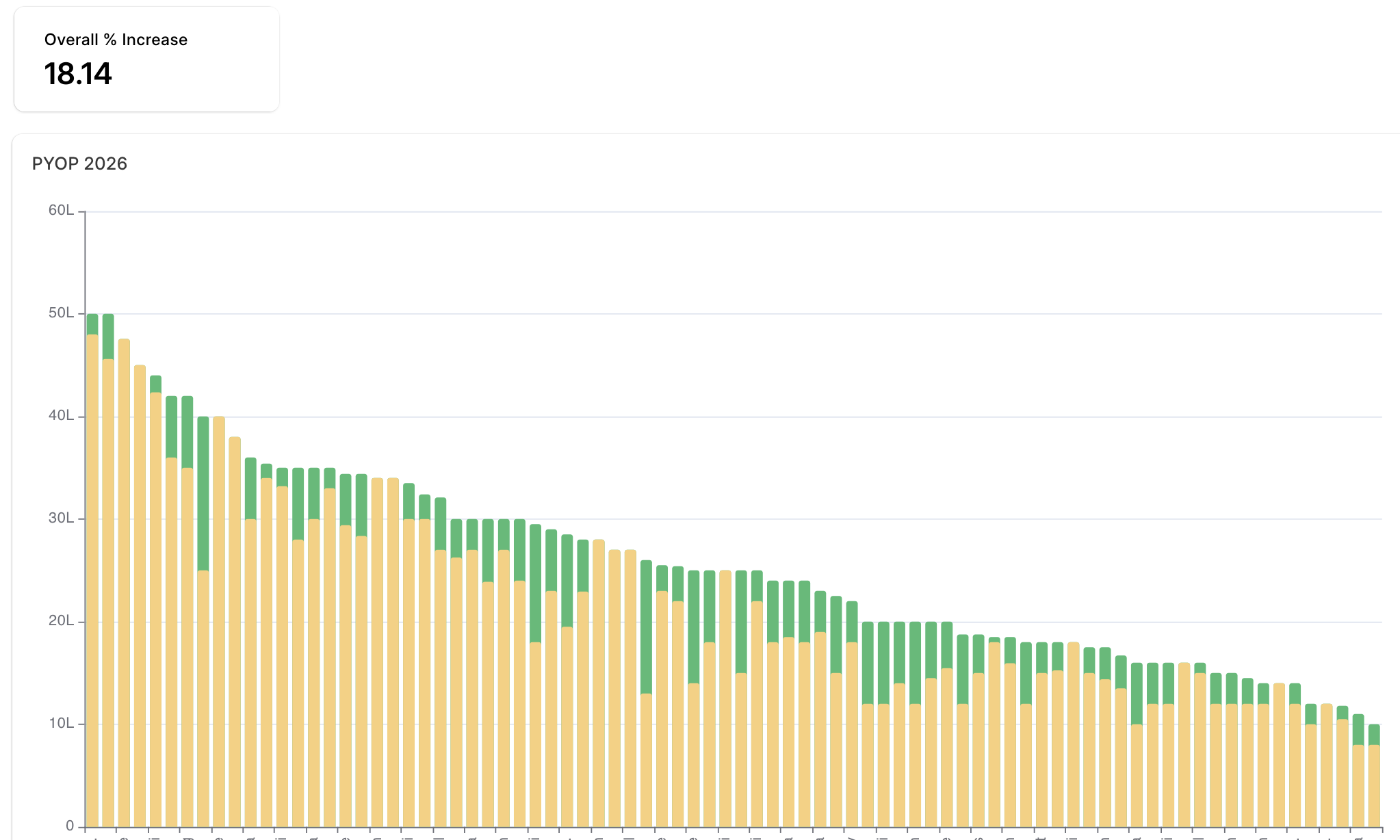
Frappe's pay chart for 2026


·
@Deepak, equity is from a fairness POV (sorry for the confusing terms)
@Noman - the process involves everyone sharing their "statement of purpose" which includes details on why and the how of their work for the coming year.
@Guest, yes x axis is each employee name (redacted)
·
Can I assume the x-axis has the names of the people and the green is the increase in pay
·
@Rushabh can you explain in detail the policy and process of implementation. I'm really curious to know and apply test basis.
·
@Ankur, there is a cap to 15% net profit. The shareholders can then ask the CEO to cut costs if the 15% net profit is not met.
·
"Everyone in the company must have the same equity as me to contribute the way they like, and be a part of taking common decisions."
Can you please elaborate on EQUITY?
Does it mean ownership at Frappe?
·
How do you make sure that costs do not spiral beyond what can be covered? I mean the business downside cycle ? Or there is cap
·
Thanks for sharing this insightful perspective, Rushabh! Your approach to building an institution without tyranny is truly inspiring. I've been reflecting on this, and I completely agree that giving employees the freedom to choose their pay can lead to a more empowered and aligned team. Your experiment at Frappe is a testament to the power of trust and transparency. Kudos to you and your team for embracing this radical approach!!